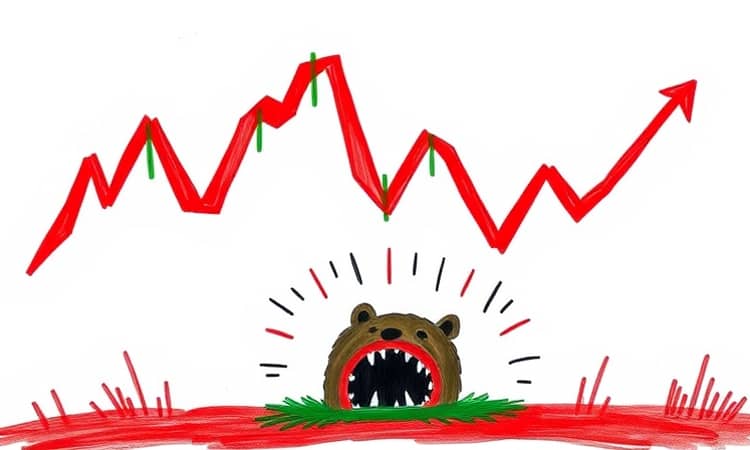
In the world of investing, the pursuit of bargains can be alluring.
Many investors seek out stocks that seem undervalued, hoping for hidden gems.
However, some of these opportunities are dangerous illusions that trap the unwary.
These are known as value traps.
They lure with cheap prices but often lead to significant losses.
Understanding this concept is crucial for anyone looking to build wealth.
It separates successful investors from those who fall prey to pitfalls.
What Exactly Is a Value Trap?
A value trap is a stock that appears undervalued based on traditional metrics.
For example, it might have a low price-to-earnings ratio.
Or it could offer a high dividend yield.
Yet, beneath the surface, fundamental issues erode its true worth.
These issues include declining earnings or structural problems.
Industry headwinds can also play a significant role.
Unlike genuine value opportunities, value traps face permanent challenges.
They are not temporary setbacks but long-term declines.
Key Characteristics of Value Traps
Recognizing value traps requires a keen eye for detail.
Here are some telltale signs to watch for:
- Persistently low valuations that do not recover over time.
- Declining or inconsistent earnings and profits.
- Industry headwinds or structural challenges like obsolescence.
- Weak competitive position against stronger rivals.
- Poor management with bad capital allocation decisions.
- High debt levels that limit financial flexibility.
- Unsustainable dividends not supported by actual profits.
These factors indicate a stock is cheap for a reason.
Investors must look beyond surface numbers to avoid mistakes.
How Value Traps Work: The Mechanics
Value traps typically form in a predictable pattern.
First, a stock falls out of favor with the market.
Its multiples compress, making it look like a bargain.
Value investors might buy in, assuming intrinsic value exceeds market price.
However, the underlying problems persist and worsen.
Revenue drops, debt mounts, and the price declines further.
No recovery occurs, leading to capital erosion.
This contrasts with true undervaluation where markets correct over time.
Real-World Examples of Value Traps
To illustrate, consider the case of Sears.
It was cheap relative to metrics but earnings eroded continuously.
Another example is BFS Entertainment in a dying industry.
These stocks attracted investors with seemingly low prices.
Yet, they failed to deliver any meaningful recovery.
Such examples highlight the danger of superficial analysis.
They serve as cautionary tales for all investors.
Comparing Value Traps and Genuine Opportunities
Distinguishing between traps and opportunities is essential for success.
The table below outlines the key differences clearly:
This comparison helps in making informed investment decisions.
Always assess the root cause of the low valuation.
Risks and Impacts of Falling into a Value Trap
Investing in a value trap can have severe consequences.
Here are some of the primary risks involved:
- Capital tie-up that misses better opportunities elsewhere.
- Further losses as the stock enters a free fall.
- Portfolio damage from eroded returns and poor performance.
- Psychological traps like herd behavior misleading investors.
- Quantified losses, such as in BFS Entertainment analysis.
For instance, a $10,000 investment might yield negative expected value.
This underscores the importance of proactive avoidance strategies.
Red Flags to Identify Value Traps Early
To steer clear, look for specific warning signs in stocks.
These red flags can signal a potential value trap:
- Lack of innovation or adaptation to market changes.
- Poor cost management and inconsistent revenue streams.
- Accounting issues or unreliable financial reporting.
- High payout ratios for dividends exceeding profits.
- No competitive moat or strategic advantage in the industry.
By monitoring these, investors can avoid costly and avoidable mistakes.
Always conduct thorough due diligence beyond initial metrics.
A Practical Framework for Avoiding Value Traps
Adopting a structured approach can protect your investments effectively.
Follow these steps to identify and avoid value traps:
- Prioritize quality over price by focusing on business moats.
- Use a multi-metrics approach checking cash flow and debt.
- Screen with quality and momentum signals to purge problem stocks.
- Assess if the issue is structural or temporary in nature.
- Stay within your circle of competence to understand the business.
- Conduct fundamental analysis of industry dynamics and competitors.
- Maintain a margin of safety and diversify your portfolio.
- Verify dividend sustainability with reasonable payout ratios.
This framework empowers investors to make smarter and more informed choices.
It aligns with Warren Buffett's advice on quality investments.
Case Studies and Quantitative Insights
Real-world examples provide valuable lessons for investors.
Consider the BFS Entertainment analysis from research.
At a 70% discount, expected value improves significantly.
This shows how deep discounts can mitigate some risks.
Another alternative is the S&P 500 Dividend Aristocrats.
They offer higher quality and consistent returns.
Comparing them to plain value stocks reveals superior performance.
- BFS Entertainment: Negative expected value at 40% discount.
- Dividend Aristocrats: Higher total returns and dividend growth.
- Research Affiliates: Improved returns by purging problem stocks.
These insights reinforce the value of a quality-first approach.
They highlight the importance of strategic and disciplined investing.
Embracing a Quality-Driven Investment Philosophy
In conclusion, avoiding value traps requires vigilance and strategy.
Focus on businesses with durable competitive advantages and sound fundamentals.
Do not be swayed by superficially cheap prices alone.
Remember the wisdom from experts like Morningstar.
Value traps are cheap for good reasons and often get cheaper.
By adopting the avoidance framework, you can protect your portfolio.
Invest in opportunities that offer genuine value and growth potential.
This path leads to sustainable financial success and security.
Stay informed and always prioritize long-term quality over short-term bargains.