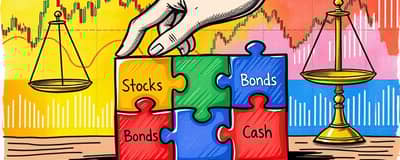
Every day you delay investing, you choose an alternative—keeping cash idle or opting for a low-yield account—that carries its own hidden price tag. Recognizing the value of the next-best alternative helps you see that inaction itself is a financial decision, one with tangible costs over time.
Understanding the Opportunity Cost of Inaction
In economics, opportunity cost captures the benefit you miss by not selecting the best available option. When applied to personal finance and investing, it measures the returns you forgo by holding cash or picking a lower-yield vehicle instead of higher-return assets at comparable risk.
Mathematically, opportunity cost in investing equals the return differential between the chosen option and the best forgone alternative. If you select a 7% fund over a 12% alternative, you incur an annual opportunity cost of 5 percentage points. Over years, this gap compounds into significant sums.
- Explicit costs: direct, out-of-pocket expenses like tuition, rent, or loan payments.
- Implicit costs: hidden, non-cash sacrifices such as lost earnings, time, or satisfaction.
Unlike sunk costs—past outlays that cannot be recovered—opportunity cost is forward-looking assessment of value, guiding smarter financial choices today.
The Exponential Power of Compounding
Time is the greatest ally of compounding. Over long horizons, even small differences in annual return rates magnify into vast wealth streams. Historically, the S&P 500 has delivered average nominal returns of 9–11% per year, while high-yield savings or CDs might offer merely 3–5%, and cash often yields 0% real or less after inflation.
Holding cash against inflation is akin to a silent loss—negative real returns over decades that erode purchasing power and undermine long-term goals. By contrast, reinvesting dividends and gains in a diversified stock portfolio fuels exponential growth.
Consider two hypothetical investors to see this effect in action:
Despite contributing three times less, Investor A ends up with over $100,000 more by harnessing the power of early compounding. This stark contrast shows why time in the market beats larger, later contributions.
Zooming in on shorter spans reveals similar patterns. Rocket Money’s example of $10,000 invested for five years at 12% grows to about $17,600, versus only $14,000 at 7%, creating an opportunity cost of roughly $3,600. Even these modest intervals highlight how quickly missed returns accumulate.
Relatable Investing Scenarios
- Cash vs. Stock Market Returns
- DIY Portfolio vs. Passive Index
- Everyday Purchases vs. Long-Term Growth
1. Parking $10,000 in a savings account at 1–2% annual yield for twenty years may grow to only $12,000–$15,000 before inflation. Invested at 8–10% in an index fund, that same sum could reach $46,000–$67,000, illustrating the forgone investment growth over time.
2. From 2002 to 2021, the S&P 500 returned about 11% annualized. Self-managed portfolios often average closer to 8%, costing DIY investors several percentage points per year. Over two decades, a $100,000 portfolio can diverge by more than $330,000 based solely on that return gap.
3. Small expenses matter. Skipping a $4.49 café mocha three times weekly frees $54 monthly. Invested at 8% for thirty years, that extra savings becomes around $66,000, proving how small, repeated spending habits carry substantial hidden costs.
4. Major life choices follow the same logic. A $20,000 car financed over four years costs $6,000 annually. If that amount were invested instead, after ten years at 8%, it would exceed $46,000—a clear example of forgo tens of thousands of dollars in potential gains.
5. Education decisions too: a four-year degree may cost $80,000 in tuition and fees plus $88,000 in forgone earnings. Investing that $168,000 instead could compound into a six-figure nest egg, reframing the conversation around true costs and benefits.
Balancing Opportunity Cost and Risk
Fear of market volatility leads many to delay investing, yet inaction has its own quantifiable cost. While risk addresses the potential for negative returns, opportunity cost represents the value of missed alternatives. Ignoring it silently erodes wealth potential.
Effective strategies like dollar-cost averaging allow gradual market entry, smoothing out price fluctuations and managing risk through consistency. Over decades, disciplined contributions overcome short-term uncertainties.
Reframing inaction as a deliberate decision with measurable consequences empowers better choices. Recognize that every postponed investment translates into future dollars left on the table, and use that insight to conquer inertia.
The journey to financial prosperity starts with a simple realization: inaction is itself a choice, and that choice carries a cost far larger than mere paper losses. By understanding opportunity cost, harnessing compounding, and committing to incremental investing, you open the door to lasting wealth.
Take the first step today—whether it’s opening a low-cost index fund, automating a small monthly transfer, or reallocating idle cash. Every moment you invest sooner chips away at the opportunity cost of inaction, propelling you toward a stronger financial future.