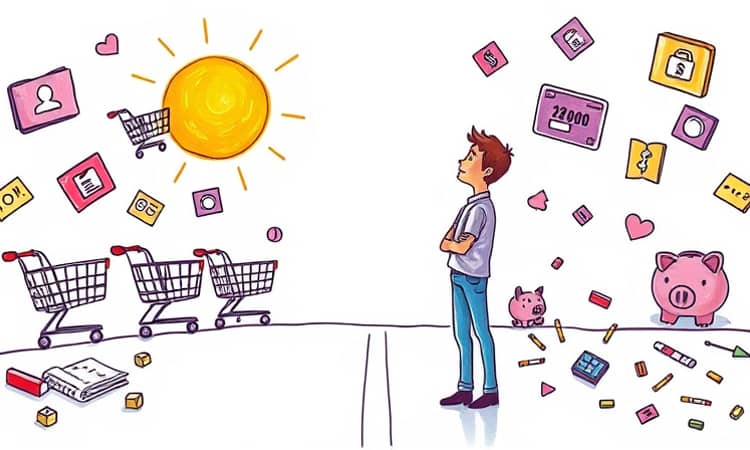
Every day, modern tools and instant gratification beckon us toward effortless purchases—only to leave our budgets stretched and our financial goals deferred. In an economy where personal consumption expenditures comprised 69% of GDP and wage growth outpaces inflation, it’s easy to feel empowered... and equally easy to slip into costly habits.
As U.S. consumer spending growth is set to decelerate to 1.8% in 2026, down from 2.8% two years prior, understanding the roots of our convenience-driven impulses can unlock smarter behaviors. This guide reveals the hidden toll of everyday spending and offers practical steps to reclaim your financial future.
Understanding the Spending Landscape
In Q3 2025, spending accounted for nearly 69% of U.S. GDP, underscoring how central consumption has become to economic health. While average hourly earnings climbed 3.8%—surpassing the 2.7% inflation rate—total consumer debt reached $18.6 trillion, driven by credit-card growth of 5.8% and debt payments consuming 11.3% of disposable income.
Within this dynamic environment, certain groups stand out as spending powerhouses:
This snapshot shows how life events, generational priorities, and cultural trends fuel spending. Yet beneath these big figures lie countless small decisions—each with a cost.
The Hidden Costs of Convenience
Convenience often masks frictionless spending in apps, one-click orders, and automated subscriptions. Without vigilance, tracking reveals overlooked impulse purchases that quietly erode savings and amplify debt. Even as 71% of global consumers fret over rising prices, the ease of everyday buys can outpace our budget awareness.
Key spending triggers include:
- Movers preparing new homes—averaging $17,000 on setup essentials.
- Gen Z and Millennials prioritizing wellness classes and bucket-list experiences.
- "Minorstones" celebrants who mark small victories with personal treats.
- High-frequency splurgers, 76% of whom made at least one big buy in December.
- Debt dynamics that keep total obligations near $18.6 trillion.
- High-income resilience sustaining stable spending amid mixed sentiment.
Only 31% of U.S. households describe themselves as financially healthy, while 43% voice concerns about their savings. Open money talk and "treat culture" can normalize spending—yet without a clear strategy, your wallet pays the price.
Smart Habits for Everyday Spending
Cultivating intentional habits transforms financial friction into forward momentum. By embracing data, automation, and periodic reviews, you can outpace impulse and align each dollar with your deepest goals.
Consider these six core habits:
- Track spending daily using apps or spreadsheets to spot impulses and align decisions.
- Boost retirement contributions by 1% annually—adding up to $84,000 by retirement.
- Automate your savings for effortless cash flow into high-interest accounts.
- Adopt a hybrid banking model: digital convenience plus in-branch guidance.
- Shift from year-end to continuous financial reviews to catch drift early.
- Follow a six-step plan: evaluate income, set targets, monitor spending, adjust allocations, automate contributions, and review progress.
When you automate your savings for effortless growth and routinely audit your outflows, the compounding benefits extend beyond the numbers. You gain clarity, confidence, and freedom to pursue life’s passions.
Looking Forward: Navigating the Road Ahead
The broader economy remains resilient. Retail sales, freight volumes, and digital bookings hold steady, while low layoffs and stable wages continue to prop up spending. Tariff rates near 12% may inch higher, but their direct effect on everyday goods remains modest.
Global financial well-being has ticked up, with the index rising from 102.2 to 105.4. Yet sentiment can lag reality—making it vital to adopt embrace smarter, human-targeted financial strategies that adapt as markets shift. Automation will proliferate, but the true power lies in pairing tools with intentional oversight.
Every choice, from a casual mobile buy to a gym membership sign-up, reverberates in your financial story. By weaving prioritize high-ROI convenience tools into a broader plan, you can thrive amid uncertainty and build lasting wealth.
Ultimately, the cost of convenience need not be measured only in dollars. When you navigate economic uncertainty with confidence, each mindful decision becomes a stepping stone toward the life you envision. Start today—your future self will thank you.