In today's rapidly shifting financial landscape, adapting your investment portfolio to new realities is essential for long-term success.
The world of investing is at a crossroads, with traditional strategies being challenged by technological disruption and global uncertainties.
To thrive, you must embrace foresight and agility, leveraging insights to navigate volatile markets.
This article provides a detailed guide to help you pivot strategically in 2026, focusing on practical approaches that inspire confidence and growth.
We'll explore core themes, macroeconomic factors, and actionable strategies to build a resilient portfolio.
Core Themes for Portfolio Adaptation in 2026
Success in the coming year hinges on integrating key principles that address evolving risks and opportunities.
Diversification across asset classes and geographies remains fundamental, but its application must be dynamic.
You should consider thematic investments like AI and energy transition, which offer growth potential in changing economies.
Active management is increasingly favored over passive strategies, allowing for better risk-adjusted returns.
Flexibility in response to factors like monetary easing and geopolitical risks is crucial for staying ahead.
- Diversify into high-quality fixed income and real assets for stability.
- Use tactical rebalancing to enhance resilience amid market volatility.
- Focus on thematic opportunities such as finite resources and digitalization.
- Prioritize active strategies to navigate unpredictable conditions.
- Maintain flexibility to adapt to inflation and policy changes.
By embedding these themes, you can create a portfolio that not only survives but thrives.
Macroeconomic and Policy Backdrop
Understanding the economic environment is vital for making informed investment decisions.
The Federal Reserve is expected to ease with 75–100 basis points of rate cuts in 2026, boosting liquidity.
This could enhance credit availability and support risk assets like equities and bonds.
However, tight fixed income spreads and elevated valuations require careful positioning.
Geopolitical risks and inflation persistence highlight the need for defensive allocations.
- Monitor improvements in liquidity conditions post-tightening for tactical advantages.
- Use FX hedging and real assets like infrastructure to mitigate currency and inflation risks.
- Consider defensive assets such as Treasuries during uncertainty.
- Stay alert to energy transition themes, including grid tech and storage opportunities.
- Balance opportunities in venture capital with caution on surged valuations in industrials.
Adapting to these macroeconomic shifts can unlock new income streams and growth avenues.
Diversification and Risk Management Strategies
Effective diversification goes beyond simple asset allocation to include multi-layered frameworks.
Asset allocation drives over 90% of returns and risk, making it a cornerstone of portfolio management.
Implement strategies like "First Responders" for sharp drawdowns and "Second Responders" for extended risks.
Avoid reactive volatility timing by focusing on position sizing and manager selection.
Incorporate low-correlation assets such as hedge funds and government bonds to offset equity beta.
- Broaden exposure with alternatives like private equity-like public strategies.
- Include real assets such as infrastructure for inflation and geopolitical hedges.
- Use securitized credit and high yield for enhanced income opportunities.
- Expand international exposure to reduce concentration risks.
- For beginners, define goals and risk tolerance clearly before allocating.
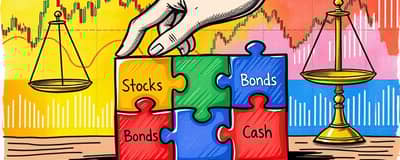
A simple starting allocation might involve 60% equities, 30% bonds, 10% cash via low-cost ETFs.
Rebalance regularly to maintain this balance and adapt to market changes.
Sector and Stock-Specific Opportunities
Identifying specific sectors and stocks can enhance portfolio performance through targeted investments.
Technology and semiconductors have led recent gains, but small-caps offer attractive earnings outlooks.
Shift focus from capital expenditure themes to AI applications as the bull cycle evolves.
Use the table below to assess YTD returns and inform your 2026 positioning.
Consider thematic positions in areas like AI, fintech, and datacenters for growth.
- Invest in Mag 7 stocks such as AMZN and NVDA for core growth exposure.
- Explore fintech options like HOOD for strong unit economics.
- Look at SaaS companies with high growth estimates, such as ZETA.
- Diversify with space or retail picks like RKLB and NKE.
- Include emerging exposures like crypto through BMNR cautiously.
These opportunities can help you capitalize on sector-specific trends.
Tactical and Active Strategies
Employing tactical and active approaches can enhance returns while managing risks effectively.
Active ETFs offer private-like returns through public portfolios, blending cost efficiency with alpha generation.
Use flexible credit strategies in high-quality fixed income as rates decline.
Leverage thematic investments in infrastructure and energy transition for long-term gains.
Enhance passive holdings with sector tilts and leverage mimicking private equity.
- Adopt active ETFs for fixed income and derivatives to capture alpha.
- Focus on undervalued sectors amid concentrated markets for better entry points.
- Incorporate venture capital and selective buyouts in thematic plays.
- Use factor tilts to improve performance beyond benchmarks.
- Balance liquidity with long-term growth in tactical allocations.
These strategies allow for dynamic adaptation to market signals.
Challenges and Full Context Considerations
Being aware of challenges is crucial for avoiding pitfalls and maintaining portfolio health.
Elevated valuations and dispersion in equity returns can complicate investment decisions.
Avoid crowded trades and static allocations to prevent underperformance during volatility bouts.
Geopolitical and fiscal convergence, such as in defense-industrial strategy, adds complexity.
Independent research and adaptability to policy signals are key for navigating uncertainties.
- Monitor evolving portfolio management practices for better execution.
- Connect strategy to dynamic resource reallocation as conditions change.
- Consider J.P. Morgan outlooks for multi-asset return insights.
- Balance liquidity needs with long-term investment horizons.
- Stay informed on inflation persistence and dollar dynamics for hedging.
By addressing these challenges, you can build a more robust and forward-looking portfolio.