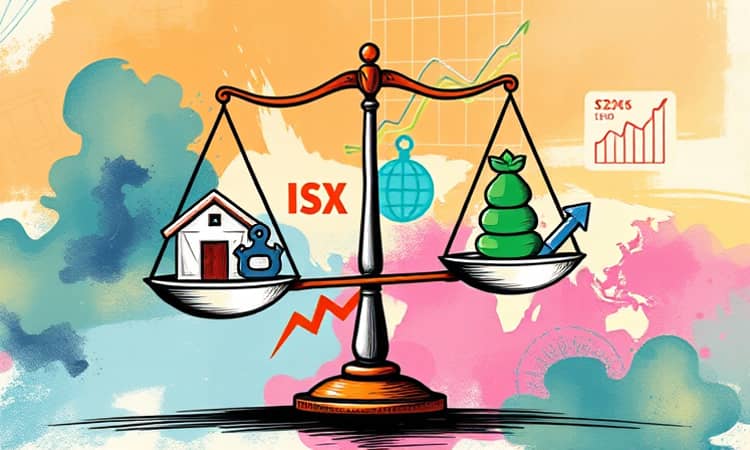
Investing can feel like charting unknown territory. By understanding the core principles that link risk and return, you can navigate the landscape with confidence, clarity, and purpose.
The Fundamental Risk–Return Trade-Off
At the heart of investing lies a simple but powerful concept: the risk–return trade-off. Put simply, investments that carry greater risk often promise greater rewards, while safer instruments deliver steadier, more modest gains.
High-risk assets typically offer higher potential returns and losses, driving both excitement and caution. Conversely, low-risk investments provide more certainty but lower returns, appealing to those who prioritize capital preservation.
This trade-off underpins modern portfolio theory and asset pricing models. Remember the adage: you cannot pursue high returns without accepting some degree of risk.
Defining Return and Risk
Clear definitions help investors measure and compare opportunities. Return reflects how much an investment grows or shrinks over time, while risk quantifies the unpredictability of those returns.
Return is typically expressed as a percentage gain or loss. Total return includes both price appreciation and income, such as interest or dividends. For example, a $20,000 stock purchase that yields $2,500 in price gain plus $150 in dividends achieves a $2,650 total return, or 13.25% on the original investment.
Risk represents the uncertainty of returns and outcomes, often measured by volatility (standard deviation) or the probability of losses over a given horizon. The higher the volatility, the broader the range of potential results.
Types and Sources of Investment Risk
Investment risk is multi-faceted. Recognizing each source empowers you to manage exposure and tailor strategies.
- Market risk (systematic): Economy-wide shifts, interest rate changes, political events.
- Credit/default risk: Borrowers failing to meet interest or principal payments.
- Liquidity risk: Difficulty selling an asset quickly at fair market value.
- Inflation risk: Rising prices eroding purchasing power of returns.
- Currency risk: Exchange rate swings affecting foreign holdings.
- Business/operational risk: Company-specific setbacks like regulatory actions.
- Concentration risk: Overexposure to a single asset or sector.
While some risks—like market risk—cannot be eliminated, others can be mitigated through thoughtful diversification and due diligence.
Measuring Risk and Return Quantitatively
Quantitative tools allow investors to assess trade-offs objectively. Two key metrics are expected return and volatility.
Expected return is calculated as the weighted average of possible outcomes, using probabilities assigned to different return scenarios. This offers a single figure summarizing the range of potential gains and losses.
Volatility is typically measured as the standard deviation of returns. A higher standard deviation signals a wider dispersion of outcomes—and thus greater risk.
To compare assets on an apples-to-apples basis, risk-adjusted ratios are invaluable:
• Sharpe ratio measures excess return per unit of volatility, comparing portfolio return above the risk-free rate to its standard deviation. • Sortino ratio refines this by focusing only on downside volatility, penalizing negative returns. • Information ratio evaluates an active manager’s performance against a benchmark by dividing excess return by tracking error.
Asset Classes Along the Risk–Return Spectrum
Assets can be arranged from lowest to highest risk, with corresponding typical return expectations. This spectrum serves as a roadmap for allocation decisions.
This illustrative table highlights how potential returns increase alongside volatility. Remember: historical performance is not a guarantee of future results.
Constructing a Diversified Portfolio
Effective portfolio construction balances risk and return through thoughtful asset selection and ongoing management.
Diversification can reduce unsystematic risk by spreading investments across uncorrelated assets. It helps stabilize returns when individual holdings underperform.
- Select assets with low correlation to one another.
- Balance growth-oriented and income-generating investments.
- Rebalance periodically to maintain target allocations.
Strategic asset allocation should align with your time horizon, financial objectives, and risk tolerance. Regular reviews ensure your portfolio remains on track as markets evolve and life circumstances change.
Practical Guidance for Different Investors
No two investors have identical goals, constraints, or comfort with volatility. Tailored approaches can help you stay aligned with personal priorities.
- Conservative: Emphasize capital preservation through a high percentage of bonds and cash equivalents.
- Balanced: Combine equities and fixed income to pursue moderate growth with controlled risk.
- Aggressive: Allocate heavily to equities and alternative assets for higher long-term return potential, accepting elevated volatility.
Regardless of your style, it is crucial to align allocation with personal goals and timeline and to avoid emotional reactions during market swings.
Conclusion
Understanding the core risk–return trade-off empowers you to build portfolios that reflect your aspirations and comfort zone.
By mastering clear definitions, quantitative measures, and diversification techniques, investors can create resilient strategies that seek growth while managing uncertainty. With disciplined execution and periodic reassessment, you can confidently navigate the ever-changing investment landscape and stay disciplined through market fluctuations and volatility.