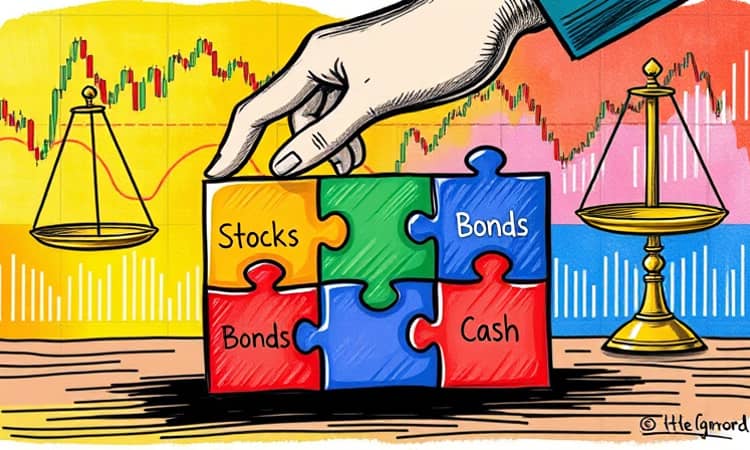
Building and maintaining a well-balanced investment portfolio is both an art and a science. Over time, market swings can shift your allocation away from your original plan, exposing you to unintended risk or missed opportunities. Periodic portfolio adjustments restore alignment with your financial goals and risk tolerance.
Understanding Asset Allocation and Rebalancing
Asset allocation is the process of dividing your portfolio among major asset classes—stocks, bonds, cash, real estate, and alternatives—to manage risk and return. Each class behaves differently in various market environments, making allocation the cornerstone of long-term investing.
When market performance causes one asset class to dominate, your portfolio drifts away from its target mix. Portfolio rebalancing means selling some of the overweighted assets and buying underweighted ones to restore your desired allocation and intended risk level.
Strategic Role of Asset Allocation
Studies show that asset allocation drives over 90% of portfolio return variability, far outweighing individual security selection. By setting a thoughtful mix of asset classes, you capture market returns while smoothing volatility.
- Equities: U.S. large-cap, small-cap, international, emerging markets
- Fixed income: government, corporate, intermediate/short-term bonds
- Cash and cash equivalents: money market funds, CDs
- Alternatives and real estate: REITs, commodities, private equity
Model portfolios from educational sources often include blends like 60% stocks/40% bonds, or more diversified splits including international equities and alternatives. These serve as starting points for personalization.
Rules of Thumb and Lifecycle Glide Paths
Age-based formulas give investors quick guidelines on stock versus bond allocations. Here’s a comparison of three common rules:
Beyond formulas, lifecycle glide paths adjust allocations gradually:
- 20s–30s: 80–90% stocks, higher growth focus
- 40s–50s: 60–70% stocks, mix growth and income
- 60s+: 30–50% stocks, emphasize preservation
Data shows many investors hold less equity than theory suggests, underscoring the importance of customizing for goals and comfort with volatility.
Why Regular Rebalancing Matters
Rebalancing offers multiple benefits that extend beyond mere allocation correction:
- Risk management: Restores your intended risk profile and prevents unintended overexposure.
- Disciplined investing: Enforces a rules-based approach—selling winners and buying laggards.
- Risk-adjusted returns: Potentially smooths volatility and enhances returns per unit of risk.
- Goal alignment: Keeps your portfolio tuned to evolving time horizons and financial objectives.
- Market adaptation: Takes advantage of relative value shifts among asset classes.
Morningstar research describes a subtle "rebalancing bonus" that emerges when divergent asset returns converge over time. While this edge is context-dependent, the primary payoff is disciplined risk control and emotional resilience.
Practical Steps to Rebalance Your Portfolio
Implementing a rebalancing plan need not be complex. Follow these steps for consistency:
- Set your target allocation bands (e.g., 60%±5% stocks).
- Choose a rebalancing frequency: calendar-based (quarterly, annually) or threshold-based (e.g., 5% drift).
- Use new contributions or dividends to tilt toward underweight assets before selling winners.
- Automate trades where possible to enforce discipline and avoid emotion-driven timing mistakes.
- Review your plan annually to ensure it still matches your risk tolerance and goals.
Behavioral Aspects and Common Pitfalls
Emotions often undermine sound investment practices. Common traps include chasing last year’s top performer or panic-selling during downturns. A clear rebalancing policy counteracts these impulses by requiring you to act against prevailing sentiment.
Avoid these mistakes:
- Neglecting to rebalance after major market moves.
- Over-trading, which can increase costs and tax liabilities.
- Using rebalancing as an excuse for market timing.
Conclusion: Staying on Track for Your Future Goals
Maintaining an optimal allocation through disciplined rebalancing is one of the most reliable ways to manage risk, foster emotional resilience, and stay aligned with your long-term objectives. By following simple rules and automating where possible, you sell high and buy low without second-guessing your decisions.
Embrace rebalancing as a cornerstone of your financial journey. With a clear plan and consistent execution, you can weather market storms, capture opportunities, and move steadily toward your retirement, education, or wealth-building goals.