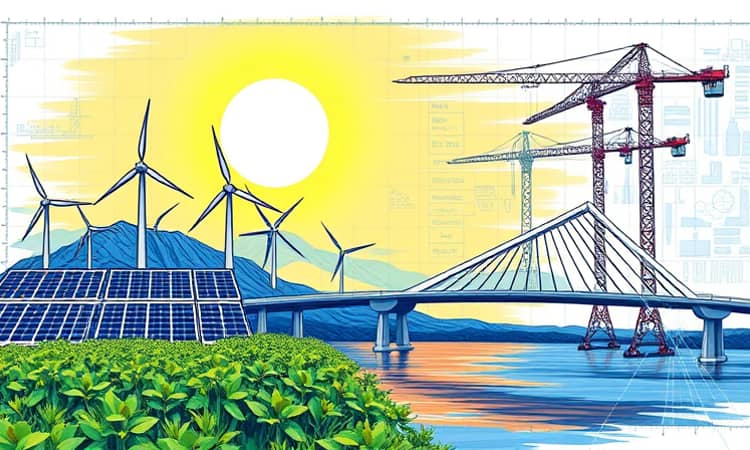
Project finance is a structuring and funding technique for large, capital-intensive projects where repayment relies on the project’s own cash flows rather than the sponsor’s balance sheet. It has emerged as a vital tool for delivering major infrastructure developments, renewable energy facilities, transport corridors, and resource extraction schemes around the world. By establishing a dedicated legal entity, termed a Special Purpose Vehicle (SPV), stakeholders can ring-fence risks and align incentives across a complex network of lenders, equity providers, contractors, and offtakers.
At its core, project finance transfers the burden of funding, construction, and operation onto a project-specific vehicle. This approach allows sponsors to undertake ventures that might exceed their conventional debt capacity or risk appetite, while enabling lenders to isolate project risks through contractual frameworks and collateral structures. The result is a financing model that can support multibillion-dollar investments with minimal recourse to the sponsor’s broader corporate assets.
What is Project Finance?
In project finance, a unique credit analysis evaluates the viability of a single project as a self-sustaining entity. The SPV takes on all project contracts, including construction, procurement, operation, and offtake agreements. Investors and lenders assess the contractual certainty of revenue streams, the technical feasibility, regulatory environment, and sponsor track record. If the project achieves financial close, debt is drawn down to fund construction, commissioning, and early operations.
This method contrasts sharply with corporate finance, where credit decisions depend on a company’s consolidated financial statements, market reputation, and overall credit rating. In project finance, stakeholders focus on the strength of the business model, the predictability of cash flows, and the robustness of contractual safeguards. By locking in long-term contracts, sponsors and lenders minimize uncertainties around price, volume, and operational performance.
Key Structural Features
Project finance structures share several defining characteristics that distinguish them from traditional financing techniques:
- Special Purpose Vehicle (SPV) for risk isolation – A separate legal entity holds all project assets and liabilities, providing clear separation from sponsors’ balance sheets.
- Limited or non-recourse financing to sponsors – Lenders’ claims are restricted to the project’s assets and cash flows, protecting sponsors’ other assets.
- Higher leverage than typical corporate financing – Projects often use majority debt financing, enabling sponsors to commit smaller equity contributions.
- Long-term debt tenor matching project life – Financing maturities can extend over 20 or even 30 years, closely aligned with concession periods or useful asset lives.
- Cash flow waterfall and covenant structure – A predefined priority of payments ensures that operating costs, debt service, reserves, and equity distributions occur in the correct order.
These elements, combined with rigorous due diligence and contractual risk allocation, allow lenders and investors to gain comfort in the project’s ability to meet its obligations under a wide range of scenarios. Key performance indicators such as the Debt Service Coverage Ratio (DSCR) and Loan Life Coverage Ratio (LLCR) drive debt sizing and covenant tests throughout the project’s life.
Comparison with Traditional Finance
Understanding how project finance differs from traditional corporate loans and bonds helps clarify why it remains the preferred vehicle for certain large-scale ventures. The table below highlights the main distinctions:
This comparison underscores why project finance can achieve funding scales that might be unattainable via conventional corporate credit channels. The dedicated SPV and contractual scaffolding transform uncertain ventures into bankable assets.
Stakeholders and Roles
Project finance transactions bring together a diverse group of participants, each with specific responsibilities and risk exposures:
- Sponsors – Equity providers such as developers, industrial companies, and private equity firms that originate the project and manage implementation.
- Lenders – Commercial banks, multilateral development banks, export credit agencies, and bond investors that fund construction and operations.
- Public Sector – Host governments and agencies that grant concessions, guarantees, or viability gap funding to enhance bankability.
- Contractors – Engineering, Procurement, and Construction (EPC) firms and Operation & Maintenance (O&M) providers that deliver performance guarantees.
- Offtakers – Utilities, large corporates, or governments that purchase output under long-term offtake agreements, securing predictable revenue.
- Advisers – Financial, legal, technical, environmental consultants, and insurers who design the structure and mitigate risks.
The Project Finance Lifecycle
The lifecycle of a project finance deal typically unfolds in several stages, each demanding close coordination and thorough analysis. During initial feasibility, teams assess technical viability, financial projections, and regulatory requirements. Structuring involves establishing the SPV, negotiating EPC and offtake contracts, and allocating risks among parties. Financial modeling and due diligence validate revenue forecasts, cost estimates, and sensitivity scenarios. Once term sheets are agreed, the transaction moves to financial close, where loan agreements, security documents, and shareholder pacts are executed. After construction and commissioning, the project enters operation, triggering scheduled debt service and equity returns under the cash flow waterfall.
Throughout operations, lenders monitor performance against covenants, and reserves may be released as coverage ratios strengthen. Any deviation from forecasts prompts management actions, potential equity injections, or renegotiation of terms to maintain stability and protect stakeholders’ interests.
Pros and Cons
Like any financial model, project finance offers advantages and trade-offs that must be carefully weighed by sponsors and investors:
- Pros: Enhanced risk allocation, off-balance-sheet debt, high leverage capacity, and protection of corporate credit rating.
- Cons: Complex documentation, high transaction costs, lengthy approval processes, and potential sponsor liability if contracts fail.
By weighing these factors against project size, sector, and risk profile, sponsors can decide if project finance is the optimal route or if alternative structures may better suit their strategic goals.
Current Trends and Future Outlook
Today, project finance is evolving to address global imperatives such as the energy transition, digital infrastructure, and sustainable development. Renewable energy projects remain at the forefront, with offshore wind, solar portfolios, and green hydrogen facilities attracting record levels of capital. Sustainability-linked loans and bonds link financing costs to environmental, social, and governance (ESG) performance, reflecting investors’ growing priorities.
Moreover, digital tools and advanced analytics are enhancing risk management, enabling real-time monitoring of construction progress, operational efficiency, and market dynamics. Blockchain and smart contracts could streamline documentation and reduce costs. In emerging markets, blended finance and public-private partnerships are unlocking critical social infrastructure, from water treatment plants to hospitals.
Conclusion
Project finance stands as a powerful mechanism for unlocking the capital required to deliver transformative, large-scale ventures that shape our modern world. By combining rigorous risk allocation, dedicated financing structures, and long-term contractual commitments, it enables sponsors and lenders to embark on bold infrastructure, energy, and industrial projects with confidence. As the global agenda shifts toward sustainability and digital innovation, project finance is poised to play an even greater role in channeling investments into the ventures that will define the next era of growth and development.