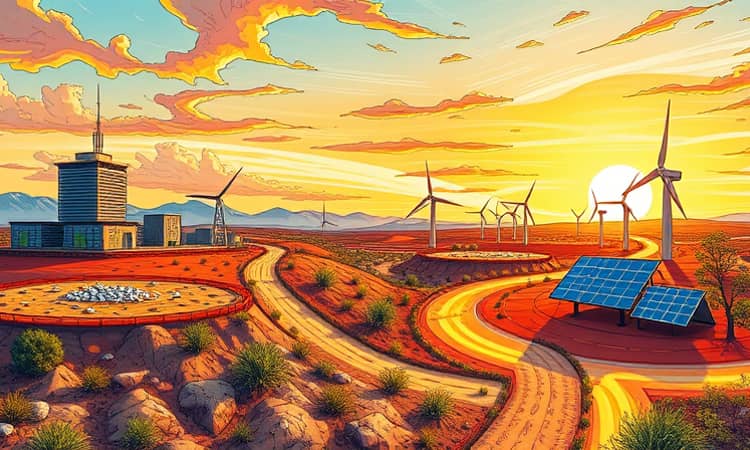
For years, resource scarcity has plagued global economies, but today, a powerful transition is unfolding.
This shift is fueled by AI data centers and energy transitions, creating a wave of investment potential.
Imagine moving from a world of constraints to one where innovation unlocks plenty.
The journey begins with understanding the core drivers reshaping our future.
The AI-Driven Power Demand Surge
Artificial intelligence is revolutionizing electricity consumption at an unprecedented scale.
Global data centers are propelling electricity growth at 15% annually through 2030.
This dwarfs the overall 4% growth rate, signaling a massive shift.
After two decades of stagnant utilities, we now face a once-in-a-generation change.
U.S. underinvestment in power production has created bottlenecks that need solutions.
Key opportunities lie in gas turbines and electric utilities adapting to this demand.
Investors can target sectors poised for growth in this new landscape.
- Heavy electrical equipment for power generation.
- Independent power producers focused on reliability.
- Oilfield services transitioning to natural gas for data centers.
This surge is not just about technology but about reimagining our energy infrastructure.
Energy Transition Economics: Beyond Mandates
Renewables are dominating the energy sector due to compelling cost advantages.
In 2024, renewables captured 90% of new U.S. capacity, with solar at 70%.
This shift is driven by economics, not just environmental policies.
New-energy equities have outperformed broader indices, showing robust growth.
Focus areas include low-carbon generation and grid enhancements for stability.
Sustainable power credit and green bonds offer financial instruments for impact.
China's leadership in solar and grid equipment presents both risks and opportunities.
- Invest in grid upgrades to support electrification.
- Explore green bonds for infrastructure projects.
- Monitor geopolitical risks in supply chains.
Embracing this transition means betting on a cleaner, more efficient future.
Critical Commodities and Metals Boom
Supply constraints are meeting rising demand for essential metals like copper and silver.
Copper benefits from renewables and AI data centers, driving prices higher.
Silver gains from industrial uses and a shift as a store of value.
Aluminum and gold remain strong, with gold hitting record levels recently.
Agriculture faces pressures from weather and tariffs, adding volatility.
Critical minerals saw oversupply post-2022, but geopolitical risks loom large.
Investors must navigate these dynamics for long-term gains.
This table highlights the scale of change underway.
Geopolitical and Security Investments
Economic security is catalyzing capital expenditure in defense and energy.
Germany plans an additional €80 billion in spending by 2026.
Europe pledges 5% of GDP on defense and infrastructure initiatives.
Japan is boosting fiscal spending to enhance resilience.
Reshoring and nearshoring favor regional small and mid-cap companies.
Supply chain resilience becomes a top priority for nations worldwide.
Investing in these areas supports stability and growth.
- Focus on defense contractors in Europe and the U.S.
- Explore infrastructure projects linked to energy security.
- Consider regional supply chain stocks for diversification.
This trend underscores the importance of strategic investments.
Demographic and Sector Tailwinds
An aging workforce crisis is creating urgent needs in the power sector.
By 2030, the U.S. and Europe require 750,000 new power workers.
Baby boomers are driving demand for senior housing REITs.
Supply constraints in housing offer investment opportunities.
Rate cuts post-2025 could aid materials and REITs significantly.
Bioprocessing tools, like bioreactors for drugs, are gaining traction.
These tailwinds provide a roadmap for savvy investors.
- Target senior housing REITs with growth potential.
- Invest in bioprocessing companies for healthcare innovations.
- Monitor labor trends to anticipate market shifts.
Understanding demographics can unlock hidden value.
Impact and Sustainable Investing Evolution
Sustainable investing is evolving towards financial materiality and impact.
AI enhances measurement with tools like geospatial analytics.
Institutions are scaling up through government channels in Brazil and Turkey.
Defense and energy are no longer excluded from impact portfolios.
Institutional scale-up via governments is channeling capital efficiently.
This shift aligns profits with purpose, creating dual benefits.
Investors can leverage this trend for both returns and positive change.
- Use AI tools to assess impact investments.
- Explore private credit and green bonds for sustainable projects.
- Engage with policies that support institutional funding.
This evolution makes investing a force for good.
Broader Economic Backdrop
The U.S. equities market leads with the S&P 500 targeting 7,800.
AI earnings show over 20% growth, driving broader economic momentum.
Global trade growth is at 2.6%, with developing nations ex-China at 4.2%.
Labor and inflation trends anchor Federal Reserve rate cuts.
AI capex is durable into 2026, broadening to semiconductors and robotics.
This backdrop supports a multiyear up-cycle from electrification and onshoring.
Investors should focus on themes that leverage this growth.
- Prioritize AI value chain stocks for earnings growth.
- Diversify into emerging markets tech sectors.
- Watch for Fed easing to boost specific asset classes.
Staying informed on economic trends is crucial for success.
Practical Investment Strategies
To navigate this transition, adopt a picks and shovels approach.
Focus on sectors that enable broader trends, like power and grid infrastructure.
Copper and silver miners offer exposure to commodity booms.
Senior housing REITs address demographic shifts effectively.
Defense and infrastructure stocks in Europe and the U.S. provide security.
Regional supply chains enhance resilience against geopolitical risks.
Always consider risks like winter natural gas volatility and AI capex sustainability.
Here are actionable steps to start investing today.
- Assess your portfolio for exposure to key drivers like AI and renewables.
- Allocate funds to utilities and independent power producers.
- Diversify with commodities like copper and silver through ETFs.
- Monitor policy changes in defense and energy spending.
- Engage with sustainable investing tools for impact measurement.
By taking these steps, you can position yourself for abundance.
The journey from scarcity to abundance is not just possible; it's already underway.
Embrace this era with confidence, knowing that informed investments can shape a brighter future.
Let this narrative inspire you to act and thrive in the coming years.