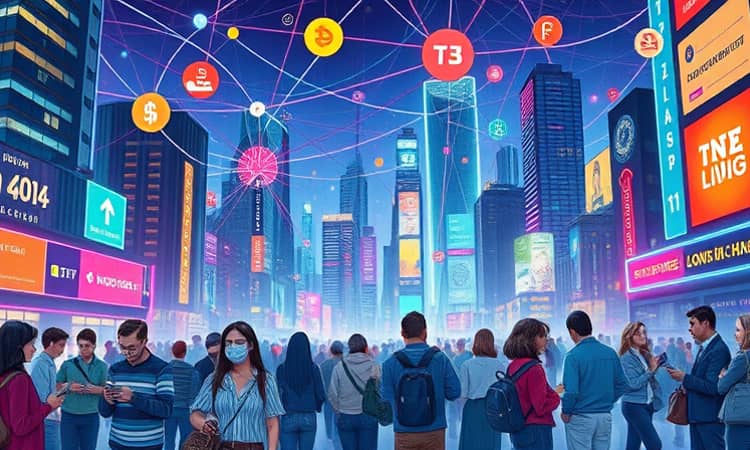
Fintech is rapidly transforming traditional financial services by leveraging cutting-edge tools and innovative business models. This article delves into the definitions, market dynamics, key players, and emerging trends that are reshaping finance across the globe.
Definitions & Scope
Fintech merges finance and technology to enhance efficiency, accessibility, and user experience. The Financial Stability Board describes fintech as technologically enabled innovation in financial services, leading to new business models, applications, and processes. IBM highlights fintech as comprising mobile applications, software platforms, and digital tools that allow individuals and enterprises to manage money seamlessly.
Michigan Tech draws a line between fintech and standard financial technology, emphasizing fintech’s role as more sophisticated and innovative than standard technology. At its core, fintech touches every facet of money: storing, saving, borrowing, investing, moving, paying, and protecting assets.
- Store and save funds through digital wallets and neobanks
- Borrow and lend via peer-to-peer and online lenders
- Invest with robo-advisors and algorithmic trading
- Move and pay money using real-time rails and payments apps
- Protect value through insurtech and digital security
Historical Context & Evolution
The evolution of fintech began with precursors such as credit cards, ATMs, and electronic trading. While these innovations laid the groundwork, they are now considered standard financial technology. The modern fintech wave truly accelerated after 2000, propelled by smartphone penetration, cloud computing, and open APIs.
By the 2010s, the rise of digital-only banks and mobile wallets disrupted branch-centric models. This shift ushered in an era of app-based, always-on, digital-first financial services that cater to consumers and businesses around the clock, enabling 24/7 access to accounts and payment solutions.
Market Size & Growth
Global fintech has grown into a multi-hundred-billion-dollar industry, with various estimates projecting continued high-double-digit growth. Fortune Business Insights valued the market at USD 340.10 billion in 2024, forecasting an increase to USD 1.13 trillion by 2032 at a CAGR of 16.2% between 2025 and 2032. Exploding Topics and Market Data Forecast offer a more aggressive projection, estimating a rise from USD 209.7 billion currently to USD 644.6 billion by 2029, a CAGR of 25.18%.
Traditional financial institutions are watching these numbers closely. McKinsey projects fintech revenues will grow nearly three times faster than those of conventional banks from 2022 to 2028, while BCG reported a 21% year-over-year gain for fintech in contrast to a 6% increase across all financial services.
Funding trends underscore investor enthusiasm. According to KPMG’s “Pulse of Fintech H1 2025,” global fintech funding reached USD 44.7 billion across 2,216 deals in the first half of the year. Exploding Topics notes that around 30,000 fintech startups emerged in 2024, reflecting the field’s dynamism.
Key Segments Transforming Finance
- Payments & Money Movement: Accounting for USD 11.55 trillion in 2024 transaction value, digital payments lead adoption globally, driven by wallets, BNPL, and cross-border remittances.
- Digital Banking & Neobanks: Mobile-first banks now serve over 65% of U.S. adults, offering checking, savings, cards, and peer-to-peer transfers without physical branches.
- Lending & Credit: Online platforms use alternative data and AI to underwrite loans in minutes. The peer-to-peer lending market could approach USD 1 trillion by 2050.
- Wealthtech & Investing: Robo-advisors democratize asset management. Platforms offer fractional shares, algorithmic trading, and social investing features.
- Insurtech: Digital distribution, usage-based policies, and AI-driven claims processing streamline insurance for consumers and businesses.
- Regtech & Compliance: AI and big data automate KYC, AML, fraud detection, and regulatory reporting, reducing costs and risk.
- Crypto & Digital Assets: Blockchain underpins decentralized finance applications, tokenization of assets, and stablecoins, with traditional institutions exploring custody solutions.
- Embedded Finance: Non-financial platforms integrate lending, payments, and insurance services, creating seamless user experiences. The embedded finance market is projected to grow from USD 146 billion in 2025 to USD 690 billion by 2030.
Enabling Technologies
Fintech innovation rests on a robust tech stack that emphasizes scalability, security, and agility. The backbone of many fintech companies is cloud-native infrastructure and software-as-a-service platforms that enable rapid deployment and efficient operations.
- Artificial Intelligence & Machine Learning: Used for credit scoring, fraud detection, personalization, chatbots, and predictive analytics. The AI fintech market is set to grow from USD 14.13 billion in 2024 to USD 17.79 billion in 2025.
- Big Data & Analytics: Alternative data sources like transaction histories and behavioral metrics power advanced risk models and personalized financial products.
- APIs & Open Banking: Application programming interfaces allow seamless data sharing between banks, fintechs, and third parties, fostering an ecosystem of interconnected services.
Regulatory Landscape & Challenges
Regulation is a double-edged sword for fintech. On one hand, clear rules for licensing, consumer protection, and anti-money-laundering foster trust. On the other, navigating a patchwork of jurisdictional requirements raises complexity and compliance costs.
Regulators are exploring sandbox environments to encourage innovation while maintaining oversight. The outcome of these initiatives will determine how quickly new entrants can scale and how established institutions adapt to disruptive models.
Opportunities & Risks
Fintech presents vast opportunities: financial inclusion for the unbanked, personalized services, lower costs, and streamlined processes. Embedded finance can unlock new revenue streams for non-financial players by integrating financial products into everyday platforms.
However, risks remain significant. Data breaches, operational outages, and algorithmic biases can undermine trust. Concentration risk may emerge if a few platform providers dominate essential rails. Regulatory misalignment across borders can also slow innovation.
Future Trends & Outlook
The next frontier in fintech is likely to be driven by agentic artificial intelligence for autonomous decision-making, advanced blockchain use cases, and deeper integration of finance into daily activities. Sustainable finance and green fintech, leveraging digital tools to fund environmental initiatives, will also gain prominence.
Partnerships between incumbents and startups will continue to shape the market. Incumbent banks, facing pressure from nimble fintech disruptors, will need to modernize legacy systems or collaborate through strategic investments and acquisitions.
Ultimately, fintech’s trajectory points toward an increasingly digital, inclusive, and automated financial ecosystem. Stakeholders who embrace collaboration, prioritize security, and stay attuned to regulatory developments will thrive as technology reshapes the finance world.