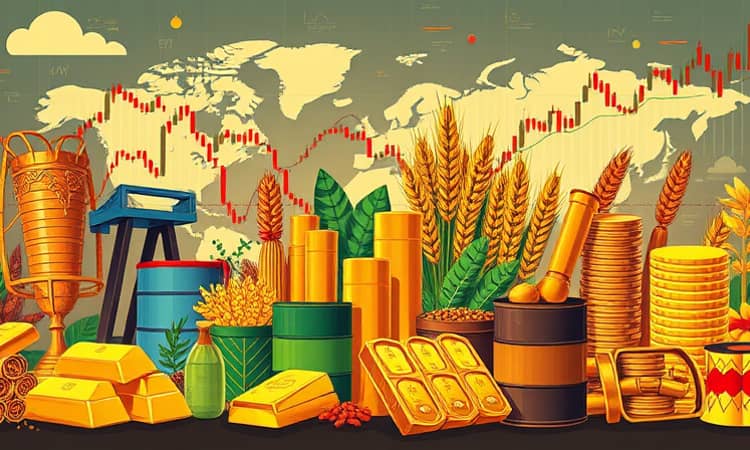
In an era of market volatility and shifting economic landscapes, investors are increasingly seeking new avenues to protect and grow their wealth. Exchange Traded Commodities (ETCs) offer a compelling solution, blending the accessibility of stock trading with the inherent value of physical assets. By exploring ETCs, you can uncover powerful tools to balance risk, capture growth, and gain tangible asset exposure without ownership.
Whether you’re a seasoned portfolio manager or an individual building personal wealth, understanding ETCs can open doors to sectors often out of reach. From precious metals to energy, agriculture to industrial resources, ETCs democratize access to essential commodities, all within the familiar framework of an exchange-traded instrument.
Understanding Exchange Traded Commodities
Exchange Traded Commodities are structured to track the price movements of one or more raw materials or a commodity index. Unlike traditional ETFs that focus on securities, ETCs concentrate on assets like gold, silver, oil, natural gas, or agricultural produce. They trade on major stock exchanges during market hours, offering seamless trading during market hours, and their value moves in step with spot or futures prices of the underlying commodity.
Most ETCs are issued as debt instruments, backed by collateral ranging from the physical commodity itself to high-credit securities. This collateralization creates a layer of protection, ensuring that investors benefit from collateral-backed structure ensures safety in the event of issuer defaults.
Benefits for Investors
Introducing commodities into a balanced portfolio can dramatically enhance its risk-return profile. While stocks and bonds form the backbone of many portfolios, ETCs bring uncorrelated performance—often reacting differently to economic shifts, inflationary pressures, and geopolitical events.
Here are a few core advantages to consider:
- Lower expense ratios than peers, thanks to passive management.
- Access to hard-to-own assets like uranium or soft agricultural commodities.
- No concerns about storage, insurance, or physical handling of goods.
- Opportunity to profit from commodities markets without the complexity of futures trading.
Risks and Considerations
As with any investment, ETCs carry inherent risks. Commodity prices can be volatile, influenced by weather events, supply chain disruptions, and global demand shifts. Futures-based ETCs may incur roll costs in contango markets, leading to potential underperformance.
ETCs are often structured as debt instruments, giving rise to counterparty and credit risk. While collateral mitigates some exposure, it’s crucial to review the issuer’s creditworthiness and the nature of the backing.
Finally, ETCs do not offer dividends or coupon payments; they focus solely on price appreciation or depreciation of the underlying commodity. Investors seeking regular income streams may need to complement ETCs with dividend-paying equities or bonds.
Implementing ETCs in Your Portfolio
To integrate ETCs effectively, follow these practical steps:
- Determine your target allocation—typically 5–10% of total assets—to commodities for meaningful diversification.
- Select ETCs with transparent, tangible asset exposure without ownership and strong collateral safeguards.
- Monitor roll yields and contango/backwardation effects if investing in futures-based ETCs.
- Diversify across sectors—precious metals, energies, agriculture—to smooth out sector-specific volatility.
- Review liquidity and trading volumes to ensure easy entry and exit.
By following these guidelines, you can harness the strategic benefits of ETCs while managing potential pitfalls. Always align your selection with your long-term objectives, risk tolerance, and broader market outlook.
Looking Ahead: Trends and Opportunities
As the global economy evolves, the role of commodities remains central. The energy transition is accelerating demand for metals like copper and lithium, while agricultural supplies face pressure from climate change and shifting consumption patterns. ETCs provide a direct gateway to these emerging trends.
Institutional and retail interest in ETCs has surged, driven by record trading volumes and expanding product offerings. Regions such as APAC and North America are leading in futures and spot trading, reflecting growing investor appetite.
For 2025 and beyond, consider these opportunities:
- Green energy metals supporting the electric vehicle and renewable sectors.
- Soft commodities sensitive to climatic fluctuations—offering hedges against food price spikes.
- Strategic resources tied to technology and infrastructure development.
By staying informed and adapting your strategy, you can position your portfolio to benefit from the next wave of commodity-driven growth. Exchange Traded Commodities are more than instruments; they are bridges to the physical world’s most essential resources, empowering investors to build resilient, diversified portfolios.