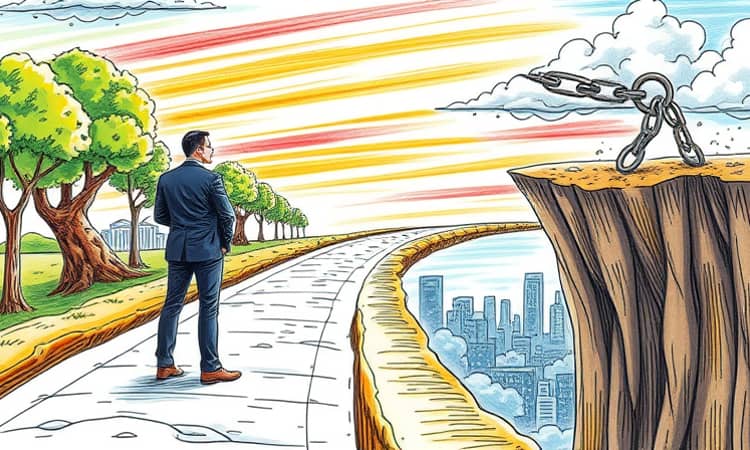
In today’s competitive landscape, businesses often face a critical decision: raising capital by borrowing to accelerate growth or relying solely on equity and internal cash flows. Debt financing offers a powerful tool but also carries significant hazards. Navigating this duality requires deep understanding, prudent planning, and disciplined execution.
Below, we explore the mechanics of debt, its transformative potential, the risks it poses, and practical guidelines to harness debt for sustainable success.
Understanding Debt Financing and Its Mechanics
At its core, debt financing involves a firm borrowing money from a lender—such as banks, bond investors, or private providers—with a contractual obligation to repay principal plus interest over an agreed timeline. Borrowed funds appear as a liability on the balance sheet, while interest expense reduces taxable income.
- Term loans: fixed amount, set maturity, periodic payments
- Lines of credit: revolving facilities for short-term needs
- Bonds and debentures: debt securities issued to investors
- Government-backed loans: SBA programs and similar
- Vendor credit: supplier payment deferrals for cash flow relief
- Convertible notes and venture debt: startup-focused instruments
Key agreement terms include principal, interest rate, maturity, amortization schedule, fees, collateral, covenants, and events of default. Interest rates reflect the borrower’s credit history, collateral, loan term, and macroeconomic policies such as central bank rates.
Why Businesses Embrace Debt: Path to Growth
When deployed responsibly, borrowed capital can unlock new opportunities:
- Funding growth investments: Expanding production, launching new products, opening facilities
- Working capital: smoothing payroll, inventory cycles, and seasonal demands
- Refinancing: replacing expensive legacy debt to optimize the capital structure
Among the advantages:
Ownership and control retained—creditors have no equity stake or voting rights. Interest payments are typically tax-deductible interest payments, creating a valuable tax shield. Predictable schedules deliver a predictable, contractual cost of capital, aiding budgeting and strategic planning.
By using leverage effectively, firms can invest more than retained earnings alone would permit, potentially accelerating revenue and profit growth. When the return on investment exceeds the after-tax cost of debt, equity holders enjoy positive leverage amplifies equity returns. Short-term credit lines address day-to-day needs, while long-term loans can match long-lived asset lifespans, ensuring alignment between cash flows and debt service.
The Perilous Side: Risks and Drawbacks
Yet debt can also become a burden when cash flows falter or interest rates rise:
- Fixed repayment obligations and cash-flow pressure: Payments are due regardless of revenue performance
- Default risk: missed payments or covenant breaches can trigger acceleration, seizure of collateral, or bankruptcy
- High leverage: elevated debt-to-equity ratios amplify vulnerability to market shocks and tightening credit
Many loans require collateral and personal guarantees, placing business assets—and sometimes personal assets—at risk. Financial and operational covenants restrict additional borrowing, asset sales, or dividends without lender consent. Violating these terms can constitute a technical default, even if all payments are current.
Variable-rate debt exposes borrowers to interest rate risk—costs can spike when central banks hike policy rates. Over time, fees and compounding interest may cause the total repayment to far exceed the original principal. For riskier borrowers, lenders demand higher rates, at times eroding the very returns the debt was meant to generate.
Comparing Debt Instruments
Assessing Your Path: Practical Guidance
Deciding whether to pursue debt financing should follow a disciplined framework:
- Perform rigorous cash-flow projections and stress tests under various scenarios
- Match debt term and amortization to asset useful life and revenue patterns
- Build cushion with undrawn credit lines or reserves to handle downturns
Maintain open communication with lenders, submit timely financial reports, and monitor covenants closely to avoid technical defaults. Seek professional advice to structure covenants flexibly and negotiate reset mechanisms for variable rates.
Regularly review the debt-to-EBITDA ratio and interest coverage metrics. If possible, plan for early repayments in periods of strong cash flow to reduce leverage faster. Cultivate a relationship of trust with your banking partners; strong repayment history enhances future borrowing capacity and may yield more favorable terms.
In a high-risk global context—where governments and corporations face rising debt burdens—being proactive in debt management is not optional, but essential. By balancing ambition with prudence, businesses can harness the power of debt as an engine for growth, rather than a catalyst for distress.
Debt financing is neither inherently virtuous nor intrinsically dangerous. It is a strategic tool that demands respect, expertise, and continuous oversight. With the right mindset and disciplined approach, your organization can transform borrowed capital into lasting value and sustainable expansion.