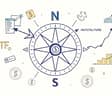
In the complex world of finance, where uncertainty looms and markets shift like sand, investors and businesses crave direction.
A Capital Compass serves as a metaphor for the structured, disciplined frameworks that steer long-term success, much like a reliable navigator guiding a ship through turbulent seas.
This concept transforms raw data and intuition into strategic, actionable pathways for growth, emphasizing that wise investment is less about luck and more about deliberate planning.
By adopting these compasses, individuals and firms can move beyond surface-level trends to build resilient portfolios and projects that weather economic storms.
The Essence of a Capital Compass
At its core, a Capital Compass is about aligning decisions with long-term goals while managing risk effectively.
It draws from real-world applications in private equity, portfolio management, and capital budgeting, where frameworks act as guiding principles rather than rigid rules.
These approaches prioritize risk-adjusted returns and strategic alignment, ensuring that every dollar invested works smarter, not harder.
Imagine planting a tree: you don't just drop a seed; you plan for decades of growth, considering soil, climate, and care.
Similarly, a Capital Compass involves immersive investigation and adaptability, turning challenges into opportunities for innovation.
It's a mindset that values patience, expertise, and continuous learning over quick wins.
Private Equity Compass: The Approach of Compass Capital
Compass Capital, a private equity firm established in 2010, exemplifies this compass in action by targeting underserved industries for attractive returns.
Their strategy rests on three key pillars that go beyond standard due diligence.
- Immersive Investigation: Leveraging team expertise and industry insights to deeply understand business dynamics.
- Structured targeting of operational improvements, such as fixing balance sheets or expanding strategically.
- Long-term partnerships with management, focusing on sustainable growth rather than short-term fixes.
This method ensures stakeholder interests are aligned, driving value through turnarounds and expansions.
By emphasizing capital flexibility and financial restructuring, Compass Capital turns struggling enterprises into thriving ventures.
Their success stories highlight how a compass can transform uncertainty into controlled, profitable outcomes.
Tactical Portfolio Compasses: Navigating Market Volatility
For individual investors and institutions, tactical frameworks like EquityCompass and the CSG Compass Portfolio Process offer tools to manage volatility.
EquityCompass uses a Core/Satellite principle, where a base allocation aims for market gains with reduced risk.
- Core allocation of 60% stocks and 40% bonds: Historically, this captures 84% of market gains while minimizing volatility, based on data from 1933 to 2014.
- Satellite components: Up to 50% in assets like commodities or high-yield bonds for diversification.
- Three-step process: Strategic long-term planning, tactical adjustments via Equity Risk Management Strategy (ERMS), and regular rebalancing.
This approach employs quantitative models to avoid biases, ensuring decisions are rules-based and data-driven.
The CSG process, from Janney Montgomery Scott, adds another layer by dynamically selecting asset classes, sectors, and securities.
- Identify strongest asset classes using a "dimmer" balance approach.
- Choose top sectors within those classes.
- Select high-quality securities with upward momentum through fundamental and technical analysis.
Both strategies emphasize downside protection and diversification, making portfolios more resilient to market swings.
Capital Budgeting: The Strategic Compass for Projects
Capital budgeting acts as a compass for long-term corporate investments, focusing on cash flow viability and strategic fit.
It involves evaluating projects that require significant capital, such as new facilities or technology upgrades.
Key principles guide this process to ensure resources are allocated wisely.
- Time value of money: Recognizing that currency today has more earning potential than in the future, so cash flows are adjusted accordingly.
- Risk and uncertainty assessment: Using tools like sensitivity analysis to account for market changes.
- Incremental cash flow: Only considering flows directly tied to the investment, ignoring sunk costs.
- Quantitative framework: Prioritizing measurable returns over qualitative factors to maintain objectivity.
The core steps in capital budgeting provide a clear roadmap for decision-making.
- Identify opportunities through idea generation and screening.
- Estimate cash flows over the project's lifespan, adjusting for inflation.
- Evaluate using techniques like net present value (NPV) and internal rate of return (IRR).
- Decide based on capital availability and strategic alignment.
This framework serves as a filter against impulsive projects, ensuring that every investment contributes to long-term value creation.
Influencing Factors: Risk and Strategic Alignment
Multiple factors shape how a Capital Compass is applied, from managerial attitudes to broader market dynamics.
Risk tolerance varies; some leaders are risk-averse, while others pursue growth aggressively, impacting investment choices.
Strategic alignment with goals like sustainability or technological advancement ensures that compasses point toward meaningful outcomes.
External influences, such as geopolitical events or AI trends—highlighted in reports like JPMorgan's 2026 Corporate Compass—add layers of complexity.
Adapting to these factors requires agility, making the compass not just a tool but a living strategy that evolves with time.
Risk Management and Adaptation Tools
Effective compasses incorporate robust tools to mitigate risks and adapt to changing conditions.
Techniques like momentum analysis and quantitative models help in making informed adjustments without emotional bias.
- Tactical allocation shifts: Moving to cash or inverse positions in unfavorable markets to protect gains.
- Use of technical and fundamental indicators: For example, ERMS in EquityCompass monitors conditions to optimize equity exposure.
- Regular reviews and rebalancing: Ensuring portfolios stay aligned with goals through annual assessments and monthly tweaks.
These tools empower investors to navigate volatility with confidence, turning potential threats into managed risks.
By staying agile, compass frameworks prevent stagnation and encourage proactive decision-making in uncertain times.
Creating Value with a Capital Compass
The ultimate goal of any Capital Compass is to generate sustainable value for shareholders and stakeholders alike.
This involves more than just financial returns; it's about fostering innovation, resilience, and long-term growth.
Compass strategies act as a filter, screening out bad projects and emphasizing those with high potential.
Value creation exceeds the cost of capital, ensuring that investments yield meaningful impacts over time.
Real-world examples, like Compass Capital's turnarounds, show how focused efforts can revitalize businesses and communities.
By prioritizing stakeholder alignment and operational excellence, these compasses build legacies that endure beyond market cycles.
Future Outlook: Evolving Strategies in a Dynamic World
As markets evolve, so too must the compasses that guide them, with trends pointing toward greater integration of technology and macro insights.
Frameworks like State Street Global Advisors' Equity Compass use quarterly macroeconomic lenses to refine equity and smart beta strategies.
Reports, such as those from Morgan Stanley's Compass Group, highlight tailored approaches from expansive platforms.
Looking ahead, factors like AI advancements and corporate separations will shape new compass directions.
- Emphasis on scale premiums and capital landscape shifts.
- Increased use of data analytics for real-time adjustments.
- Focus on sustainability and ethical investing as core components.
This evolution ensures that Capital Compasses remain relevant, offering adaptable pathways for future success in an ever-changing financial environment.
By embracing these trends, investors can stay ahead of the curve, turning uncertainty into a canvas for innovation and growth.