Raising financially savvy children means more than handing out coins—it requires thoughtful guidance at every stage.
By introducing age-appropriate activities and clear frameworks, parents can cultivate lifelong money skills that empower young learners.
Understanding Money Early: The Four Functions
Even preschoolers can grasp the basics of money when lessons focus on the four key functions: spending, saving, investing, and giving. These four pillars form the foundation of any strong financial education plan.
When you frame money as a tool rather than a toy, children learn practical skills and values simultaneously. Emphasize understanding money as a tool and encourage questions about how people earn, spend, and share resources.
Preschool (Ages 3-5): Building Foundations
At this stage, children benefit most from hands-on, visual activities that make abstract concepts concrete. Clear jars, colorful tokens, and pretend play bring money to life.
Visit a local bank or set up a pretend store at home. Watch as little ones light up when they exchange play money for small rewards.
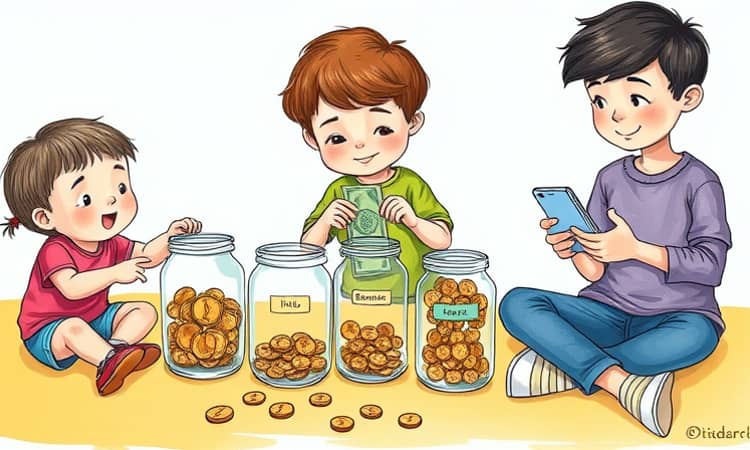
- visual savings accumulation through clear jars: Three distinct jars for save, spend, give
- Pretend play store or restaurant to practice transactions
- Short storybooks like Bunny Money and A Chair for My Mother
- Simple board games such as The Allowance Game for turn-taking
- Bank visits to see real bills, coins, and teller interactions
By making money tangible, preschoolers develop confidence in counting coins and identifying the purpose behind each jar.
Elementary and Tweens (Ages 6-12): Structured Growth
As children enter elementary school, their cognitive skills allow for more structured lessons. The classic three-jar system—spending, saving, and giving—works exceptionally well at this age.
Set clear allowances tied to weekly chores. Introduce simple budgets and goal-setting: saving for a bike, a special toy, or a charitable gift.
- hands-on earning opportunities like chores for allowance and responsibility
- Open a savings account and explain matching contributions
- Reward academic achievements: $10 per A, $5 per B, adjusted to fit your budget
- Include games like Monopoly, Pay Day, and Money Bags for strategic play
- Track needs vs. wants with weekly family budgeting discussions
These activities teach delayed gratification and financial planning in a fun, collaborative way. Children learn that goals take time and consistent effort.
Teens and Beyond (Ages 13+): Advanced Tools and Responsibility
Teenagers can begin to engage with real-world financial products and responsibilities. This is the moment to introduce custodial accounts, basic investing, and digital budgeting tools.
Encourage summer jobs or advanced chores to build work ethic. Show how credit cards function and discuss the importance of paying balances in full. Open a joint savings or custodial Roth IRA account to demystify investing basics.
Practice these advanced lessons with realistic simulations. Let teens manage a small portion of household bills or set up a monthly budget using an app. Emphasize real-world financial responsibility and growth so they feel prepared for adulthood.
Practical Habits and Family Best Practices
- Lead by example: Parents model good habits more effectively than lectures.
- Match savings: Offer to match up to a set amount to reinforce saving behavior.
- Host family money meetings: Discuss bills, goals, and progress together.
- Use on-the-fly lessons: Shopping trips illustrate cash vs. card choices.
- Encourage giving: Always include a charitable jar to build empathy.
By weaving money lessons into daily life, families create a supportive environment where financial skills flourish.
Conclusion: Cultivating Lifelong Financial Confidence
Teaching sound money habits is a marathon, not a sprint. It requires patience, consistency, and a willingness to embrace mistakes as learning moments.
By providing age-appropriate tools and nurturing a growth mindset, parents can instill nurture a growth mindset around money and watch their children flourish financially and personally. The lessons learned today will pay dividends for a lifetime.