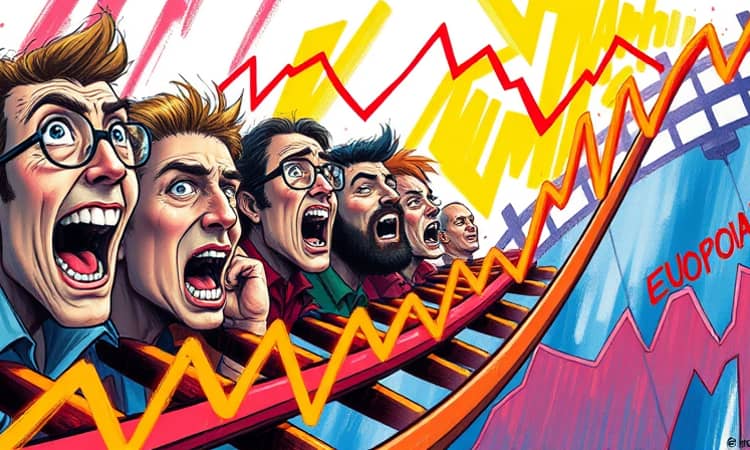
In an era where market movements often defy traditional assumptions, behavioral finance offers a lens to understand why prices swing not just on fundamentals but on human emotions.
The Big Picture: What Behavioral Finance Is and Why Mood Matters
Behavioral finance combines psychology and economics to explain how investors depart from rational ideals. Traditional finance assumes rational investors, efficient markets, and prices reflecting all available information.
By contrast, behavioral finance highlights how emotions, cognitive biases, and social dynamics systematically influence decisions and pricing. When traders feel exuberant, they chase assets; when they fear losses, they abandon markets.
Markets are more than numbers on a screen—they are a reflection of human psychology in motion. Understanding mood helps explain bubbles, crashes, persistent anomalies, and the ebb and flow of momentum.
Recognizing that market cycles are as much emotional as economic empowers investors to avoid buying at tops filled with euphoria and selling at bottoms drenched in despair.
The Emotional Cycle of Markets: Mapping Mood to Price
Market sentiment often follows a predictable emotional trajectory. Scholars label phases such as optimism, excitement, thrill, and euphoria, which give way to anxiety, denial, fear, panic, capitulation, depression, hope, relief, and back to optimism.
The metaphor of Mr. Market’s manic-depressive swings—coined by Benjamin Graham and embraced by Warren Buffett—captures this perfectly. One day he offers sky-high prices brimming with optimism; the next he demands steep discounts steeped in pessimism.
Economist Hyman Minsky framed this in terms of financial stability: hedge finance, speculative finance, Ponzi finance, and eventual crisis. As optimism fuels risk-taking, fragility builds until a mood shift triggers a sharp reversal.
By mapping moods to price behavior, investors can identify when markets are overheated and when genuine opportunities emerge.
Core Emotions Behind Market Mood Swings
Fear and greed are often described as the twin engines of market movements. Greed drives bubbles and speculative manias, while fear sparks panics and risk-off regimes.
Hope and regret also play pivotal roles. Hope tempts investors to hold on to losing positions, expecting a rebound. Regret aversion can lead to inaction or panic as market moves outpace one’s comfort zone.
Overconfidence surges in bull markets, as traders overestimate their skill and information. They trade more, use leverage, and hold undiversified portfolios.
Experimental studies reveal that mood and stress influence risk preferences. A pleasant mood can increase risk-taking in some contexts, while stress may prompt hasty, intuitive choices over deliberate analysis.
Key Behavioral Biases That Drive Mood Swings
Several cognitive and emotional biases underlie the emotional cycle, causing systematic deviations from rational decision-making.
- Loss aversion: Disliking losses more than equivalent gains leads investors to hold losers too long and sell winners prematurely.
- Overconfidence bias: Overestimating one’s own judgment results in excessive trading, leverage, and concentration in positions.
- Herd behavior: Following the crowd amplifies trends, fueling bubbles and crashes when sentiment shifts.
- Confirmation bias: Seeking information that supports existing views causes ignoring warning signs in euphoric markets and staying overly bearish in recoveries.
- Anchoring: Fixating on reference points like purchase price or 52-week highs distorts judgment and price expectations.
- Recency bias: Overweighting recent performance leads to extrapolating bull markets indefinitely or assuming a crash signals permanent decline.
- Disposition effect: Realizing gains quickly while avoiding realizing losses undermines portfolio efficiency and tax planning.
By recognizing these biases, investors can implement rules-based strategies and decision frameworks that mitigate emotional pitfalls.
Empirical Links Between Mood, Sentiment, and Market Behavior
Bridging theory with data, researchers have developed sentiment indices and examined their predictive power. The Fear & Greed Index, for example, combines volatility, breath, put/call ratios, and more to quantify market extremes.
A recent study found that extreme sentiment levels measured by index are significant predictors of volatility and shifts in return distributions. High greed readings often precede increased risk and correction episodes, while extreme fear readings can signal oversold conditions and potential rebounds.
Other empirical evidence links mood proxies—such as media tone, investor surveys, and social media chatter—to cross-sectional returns, liquidity, and trading volume.
In practice, disciplined investors integrate sentiment signals with fundamental analysis, using contrarian strategies to buy when pessimism is at its peak and trim exposures when euphoria peaks.
Behavioral finance deepens our understanding of markets by revealing the human forces at play. Recognizing that mood and bias shape cycles empowers investors to navigate volatility, avoid common pitfalls, and harness emotional extremes as opportunities.
By blending psychological insights with economic rigor and data-driven evidence, market participants can design robust portfolios that protect against their own biases and capitalize on the emotional rhythm that defines financial markets.